
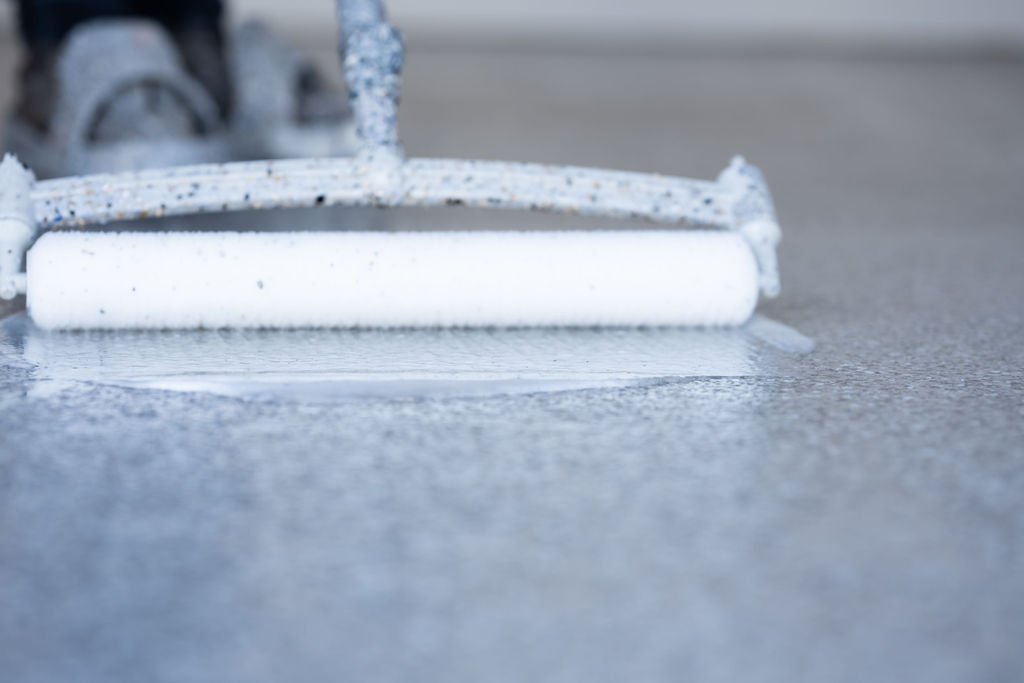
Why Heavy Duty Epoxy Floor Coating Beats Standard Floor Paint
A heavy duty epoxy floor coating is the better choice when a garage floor needs more than a cosmetic refresh. Unlike standard concrete paint, a two-part, high-solids epoxy system cures into a thick, bonded surface that helps resist tire marks, oil, chemicals, abrasion, and impact.
Choose the system based on how you use the space:
- Choose 100% solids epoxy for a thicker, non-porous protective layer.
- Choose a textured non-skid finish for wet entry areas, ramps, or spaces where traction matters.
- Choose a decorative flake system with a protective topcoat for a clean, customized garage finish that is easier to maintain.
Standard paint can look good at first, but it is a thin film that may peel or lift under hot tires and repeated garage use. A properly prepared epoxy floor creates a seamless barrier over concrete, helping protect it from stains, dusting, cracks, and daily wear.
I am Lev Golosov, and next we will look at what makes epoxy structurally tougher than ordinary floor paint.
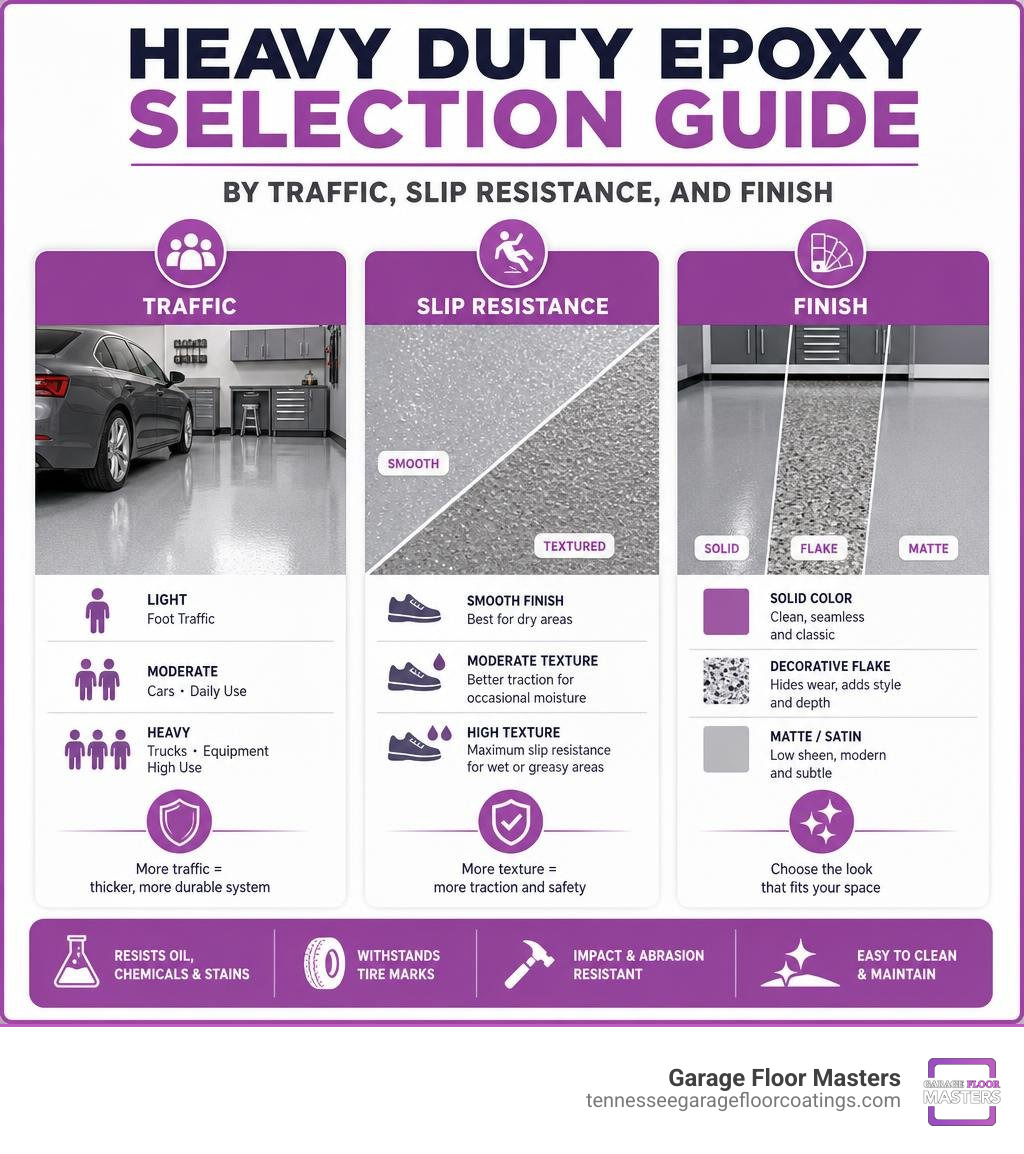
Heavy duty epoxy floor coating terms at a glance:
What Sets Heavy Duty Epoxy Floor Coating Apart from Standard Floor Paint
Bare concrete looks tough, but under a microscope, it behaves more like a rigid sponge. It is full of microscopic capillaries that absorb moisture, motor oil, road salts, and chemical spills. Over time, untreated concrete produces fine dusting, micro-fissures, and surface spalling.
When property owners want to clean up that messy slab, they often reach for a $40 can of latex or acrylic porch and floor paint from a big-box store. Within six months, that cheap fix turns into a peeling, flaking nightmare.
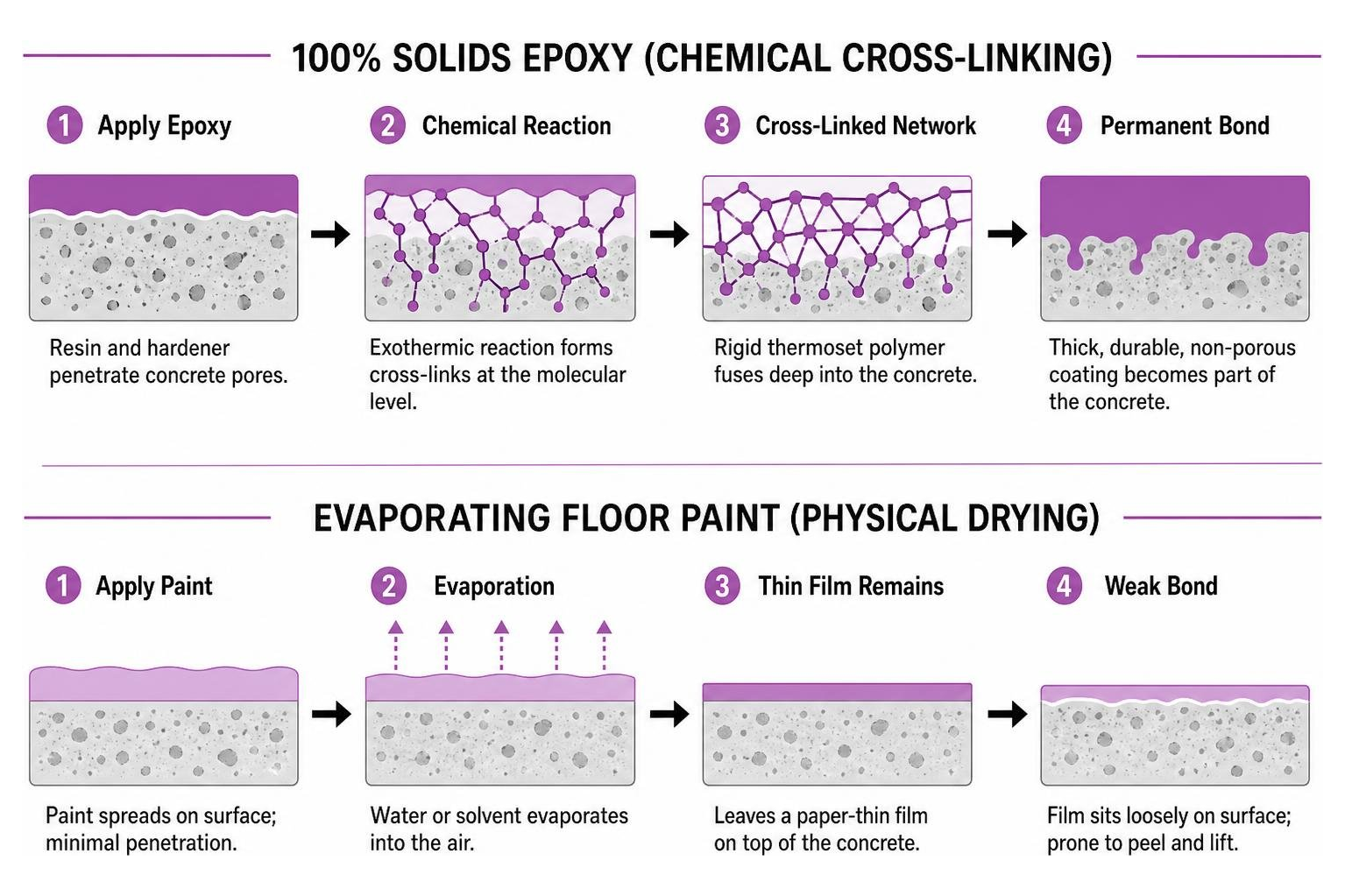
The difference comes down to chemistry and mechanical adhesion. Standard floor paint dries purely through evaporation. When the water or solvent evaporates into the air, it leaves behind a paper-thin film sitting loosely on top of the concrete.
High-performance epoxy floor coatings do not simply dry; they undergo an exothermic chemical reaction. The resin and hardener cross-link into a rigid thermoset polymer network that fuses deep into the concrete’s open pores.
| Performance Feature | Standard Latex / Acrylic Floor Paint | 100% Solids Heavy-Duty Epoxy Coating |
|---|---|---|
| Film Thickness (Dry) | 1 to 3 mils per coat | 10 to 30+ mils per system |
| Curing Mechanism | Physical evaporation (air dry) | Chemical cross-linking (covalent bonds) |
| Hot Tire Pickup Resistance | Poor (softens and peels under hot rubber) | Excellent (will not re-melt or lift) |
| Chemical Resistance | Low (stained by oil, gasoline, and solvents) | High (resists fuels, acids, oils, and brake fluid) |
| Impact & Abrasion Tolerance | Low (scratches under dragged items) | Exceptional (withstands dropped tools, pallets, machinery) |
| Volatile Organic Compounds | Varies (often contains off-gassing solvents) | Zero VOC formulations available |
| Expected Lifespan | 6 to 18 months under vehicle traffic | 10 to 20+ years when professionally installed |
The Chemistry of 100% Solids Formulations
What does “100% solids” actually mean? In the coatings world, it means that 100% of the liquid you spread onto the floor remains on the floor as a solid plastic matrix after curing. There are zero water carriers and zero solvents to evaporate into the atmosphere.
These systems pair an epoxy resin (Part A) with a specialized polyamine or cycloaliphatic amine curing agent (Part B). When mixed in the proper ratio, the molecules lock together in tight three-dimensional grids.
This reaction produces distinct advantages:
- Zero Shrinkage: Because nothing evaporates, the wet film thickness equals the dry film thickness. The coating does not shrink, pull away from joints, or create internal tension stresses.
- Dense, Non-Porous Shield: The cross-linked polymer creates a hermetic barrier that blocks water, oils, and automotive fluids from reaching the substrate.
- Zero VOCs and Odorless Installation: Formulations without volatile organic compounds let crews work indoors without hazardous fumes driving everyone out of the building.
Standard Latex and Acrylic Paint Limitations
Standard concrete paint has a very high liquid-to-solid ratio. A typical acrylic paint might contain 60% water and solvents and only 40% solid binders and pigments. Once applied at 5 mils of wet thickness, more than half of the material evaporates into thin air, leaving behind a microscopic 1.5 to 2 mil film.
That thin barrier cannot handle thermal expansion or mechanical shear. When you drive your car into the garage after a long highway trip, your tires are hot. As the synthetic rubber cools, it contracts and grabs the floor surface. Because standard paint lacks deep mechanical adhesion, the contracting tire easily breaks the surface bond. The paint delaminates, creating the common headache known as hot tire pickup.
To dive deeper into the mechanics of hot tire lift and long-term protection, check out our definitive garage epoxy guide.
Types and Core Performance Features of Industrial Epoxy Systems
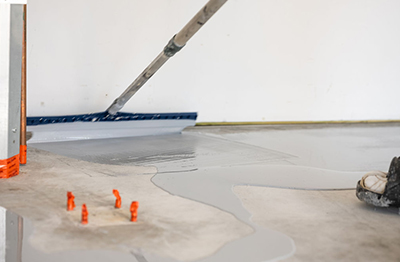
Commercial and industrial settings demand coatings engineered for extreme punishment. Heavy machinery, continuous forklift traffic, and corrosive chemicals destroy ordinary finishes in days. Industrial epoxy systems are tailored to handle specific operational stresses.
When evaluating commercial floor coatings, property managers look for three vital structural metrics:
- Compressive Strength: High-solids industrial epoxies regularly exceed 10,000 to 12,000 psi compressive strength—more than double the strength of standard structural concrete (which typically sits around 3,500 to 4,500 psi).
- Abrasion Resistance: Formulated to withstand constant steel-wheel and hard-polyurethane caster traffic without gouging or dusting.
- High Light Reflectivity: A high-gloss, pure epoxy base coat can boost ambient light reflectivity by up to 400%. This brightens work bays, improves warehouse visibility, and cuts lighting utility bills.
Selecting the Right Heavy Duty Epoxy Floor Coating for Your Facility
No single flooring formula fits every environment. Choosing the right system depends on foot traffic, vehicle weight, chemical exposure, and wet conditions:
- Self-Leveling High-Gloss Epoxy: Best for pharmaceutical labs, cleanrooms, showrooms, and assembly plants. It yields an ultra-smooth, seamless glass finish that wipes down instantly.
- Decorative Flake and Quartz Systems: Multi-layer systems incorporating vinyl color flakes or colored quartz aggregate between a 100% solids epoxy base and a durable clear topcoat. Ideal for residential garages, locker rooms, retail spaces, and auto service bays.
- High-Build Industrial Mortars: Trowel-applied resin mortars used in manufacturing plants and heavy equipment shops to rebuild badly eroded concrete and withstand extreme impact.
For high-volume distribution centers that run 24/7, specialized floor coatings for warehouses provide the heavy load ratings needed under multi-ton pallet jacks.
Textured Non-Skid and Slip-Resistant Safety Profiles
In areas exposed to rain, snow, oil, or washdown water, a mirror-smooth floor can turn into an ice rink. Incorporating specialized aggregates transforms an epoxy system into a high-traction safety floor.
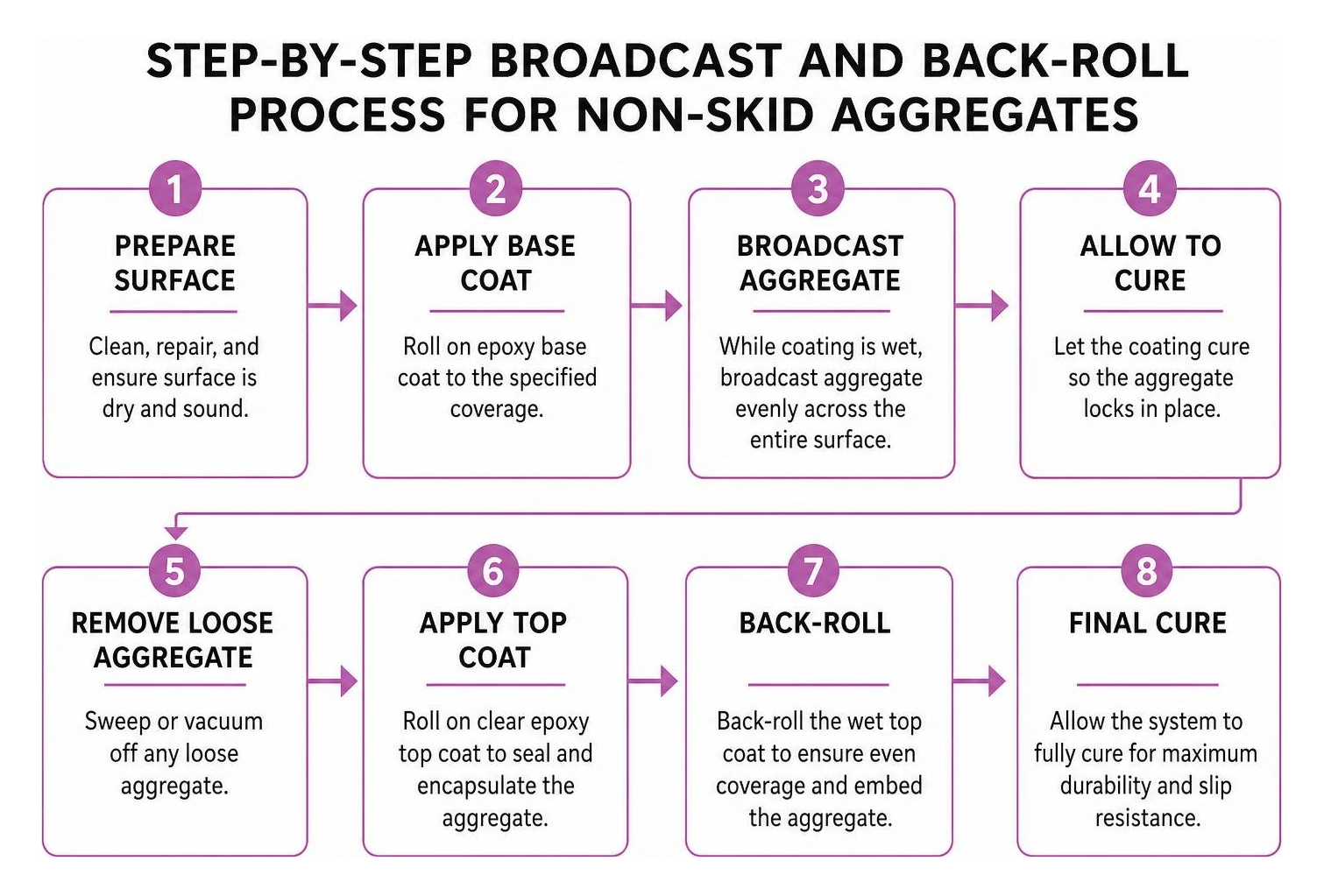
Industrial aggregate options include:
- Graded Silica Quartz: Provides consistent, uniform traction for general commercial foot traffic.
- Aluminum Oxide (#46 to #60 Grit): One of the hardest minerals on earth, diamond-like aluminum oxide offers extreme wear resistance and aggressive slip resistance in oily or high-wear industrial settings.
Heavy-duty textured non-skid epoxy systems can meet rigorous standards, including Navy Military Specification Mil-PRF-24667B for flight decks and marine non-skid surfaces. They also help facilities comply with OSHA and ADA (Americans with Disabilities Act) static and dynamic coefficient of friction standards. These profiles keep workers safe across loading docks, external ramps, tugboat decks, tow truck beds, and municipal walkways.
Surface Preparation and Professional Installation Process
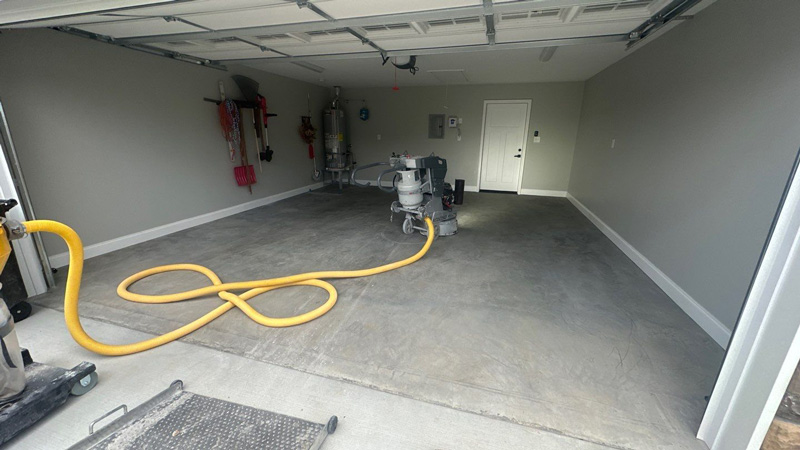
Even the most advanced industrial resin will fail if applied to an improperly prepared slab. In fact, over 90% of all coating delaminations trace directly back to skipped prep steps or acid washing shortcuts. Professional installation requires precise mechanical profiling.
If you are tired of fine white dust settling on your tools, vehicles, and storage boxes, taking time to hire a professional epoxy floor service and stop the dust creates a permanently sealed, dust-free slab.
Concrete Profiling and Steel Substrate Priming
Epoxy needs a rough, open texture to grip concrete. Acid etching using muriatic acid is inconsistent, introduces gallons of unwanted water into the slab, and rarely achieves the necessary surface profile.
Our process uses industrial planetary diamond grinders equipped with HEPA-filtered vacuum extraction systems:
- Mechanical Grinding: We grind the entire surface to remove previous failed paints, sealers, latencies, and dirt, achieving an International Concrete Repair Institute (ICRI) Concrete Surface Profile of CSP-2 to CSP-3 (a texture similar to 80-grit sandpaper).
- Moisture and Crack Treatment: Cracks wider than a credit card, spalls, and expansion joints are chased out, cleaned, and filled with structural polyurea or epoxy mortar patches.
- Steel Substrate Priming: When applying heavy-duty non-skid systems over diamond plate, steel walkways, or vehicle decks, the metal must be degreased and ground or shot-blasted to white metal. An anti-corrosive primer is mandatory to prevent “freckle rusting”—where moisture in the ambient air causes pinpoint rust blooms to burst through the curing resin.
Working with experienced, certified epoxy garage floor installers ensures your concrete is correctly tested for moisture vapor transmission before the first coat goes down.
Proper Application of a Heavy Duty Epoxy Floor Coating System
Once the substrate is profiled, vacuumed, and wiped clean, mixing and spreading must move with precision.

The application follows strict technical guidelines:
- Mechanical Mixing: Part A and Part B are combined (typically in a 2:1 ratio by volume or 1:1 depending on chemistry) and mixed with a low-speed mechanical spiral mixer for 3 to 4 full minutes. Inadequate mixing leaves unreacted resin pockets that stay permanently soft and tacky.
- Pot Life Management: Once combined, the exothermic reaction starts immediately. Leaving 3 to 5 gallons of mixed epoxy sitting inside a bucket can cause it to heat up, smoke, and flash-cure within 10 to 15 minutes. The mixture must be immediately poured out onto the floor in ribbon patterns to extend its working time (typically 30 to 45 minutes).
- Notched Squeegee and Roller Spread: The epoxy is pulled using calibrated notched squeegees to maintain exact mil thickness, followed by cross-rolling with lint-free phenolic core rollers to eliminate air bubbles and level the coating.
- Aggregate or Flake Broadcast: If applying decorative flakes or slip-resistant aluminum oxide, the aggregate is broadcast into the wet base coat until rejection or to the specified safety density.
- Clear Protective Topcoat: A chemical-resistant topcoat seals in textures, provides UV stability, and guards against abrasions.
For complex commercial footprints, partnering with experienced commercial epoxy resin floor installers keeps projects on schedule and prevents expensive material waste.
Curing Times, Coverage Rates, and Long-Term Maintenance
Understanding coverage calculations and cure schedules helps prevent project delays and ensures your floor reaches its full chemical hardness.
Pricing and material requirements depend on square footage, concrete condition, and selected system enhancements. Review our comprehensive epoxy pricing guide for realistic project cost expectations.
Coverage Calculations and Pot Life Dynamics
Coverage rates depend on the type of epoxy system and substrate porosity:
- Heavy-Duty Textured Non-Skid Epoxies: Because these materials are thick and incorporate coarse traction aggregates, coverage ranges from 40 to 50 sq. ft. per gallon (or 30 to 40 sq. ft. per gallon for extra-coarse military profiles).
- 100% Solids Smooth Coatings: Standard smooth self-leveling resins can yield 100 to 125 sq. ft. per gallon on smooth concrete slabs. A bulk 30-gallon kit can cover up to 3,450 sq. ft. at 116 sq. ft. per gallon.
- Thin-Film High-Yield Epoxies: Specially engineered 100% solids resins can be applied thinner to stretch coverage while maintaining high durability.
Contractor-grade 3-gallon resin kits run between $100 and $150 on average for base materials, but final project costs depend on surface repairs, diamond grinding time, aggregate selection, and protective topcoats. For total budget clarity, read our transparent floor pricing guide without hidden fees.
Curing Schedules Across Temperature Extremes
Ambient room temperature and concrete slab temperature directly influence curing rates. Standard epoxy chemistries require temperatures between 50°F and 90°F for proper cross-linking.
However, specialized heavy-duty formulations engineered with low-temperature catalysts can cure in ambient temperatures down to 25°F, allowing winter installations across industrial plants without heated facilities.
A standard cure timeline at 70°F to 75°F looks like this:
- Dry to Touch: 8 to 10 hours.
- Light Foot Traffic: 16 to 24 hours.
- Full Motorized / Heavy Vehicle Traffic: 72 hours.
- Full Chemical Cure: 7 days (avoid harsh chemical cleaners or pressure washing during this window).
Long-Term Maintenance
Heavy-duty epoxy floors are very easy to care for:
- Routine Sweeping: Remove dry grit and sand using a soft-bristle broom or commercial dust mop.
- Mopping: Clean the floor using warm water and a pH-neutral cleaner. Avoid citrus-based acids or high-concentration bleach solutions that can dull high-gloss finishes over time.
- Spill Cleanup: While the floor resists oils, gasoline, and hydraulic fluids, clean up spills promptly to prevent slips and maintain long-term gloss.
Frequently Asked Questions About Heavy-Duty Epoxy Coatings
How long does a heavy-duty epoxy floor typically take to cure for vehicle traffic?
Most 100% solids heavy-duty epoxy systems reach initial set within 8 to 10 hours, allowing light foot traffic after 16 to 24 hours. However, you should wait a full 72 hours before parking vehicles, forklifts, or heavy machinery on the floor. Full chemical resistance and ultimate tensile hardness take roughly 7 days to complete. Colder slab temperatures will extend these curing windows.
Can heavy-duty non-skid epoxy be applied over steel or in freezing weather?
Yes. Heavy-duty non-skid epoxy systems can be applied over prepared steel, diamond plate, and aluminum, provided the metal is degreased, mechanically profiled, and coated with a corrosion-inhibiting primer to prevent freckle rusting. Additionally, specialized cold-weather industrial formulations can cure in temperatures as low as 25°F, making cold-weather and unheated warehouse installations possible.
What is the expected cost and coverage rate for commercial-grade epoxy?
Coverage rates vary based on film thickness and texture. Heavy aggregate non-skid coatings cover 40 to 50 sq. ft. per gallon, while smooth 100% solids coatings cover 100 to 125 sq. ft. per gallon. Project pricing varies based on the condition of your concrete, necessary crack repairs, moisture vapor levels, and the features you select. We always recommend getting a free on-site estimate to establish an accurate scope of work.
Conclusion
Standard floor paint might seem like a thrifty weekend shortcut, but it cannot handle the abrasion, heat, chemicals, and impact of daily garage or industrial use. Investing in a high-solids, heavy-duty epoxy floor coating creates a seamless, durable barrier that protects your concrete slab for years to come.
At Garage Floor Masters, we install professional concrete floor systems across East Tennessee, including Knoxville, Oak Ridge, Crossville, Vonore, Sevierville, Lenoir City, Maryville, Tazewell, LaFollette, Loudon, Friendsville, Powell, Jefferson City, Pigeon Forge, Clinton, Andersonville, and White Pine.
In addition to traditional epoxy systems, we specialize in advanced UV-stable polyaspartic coatings that are 4x stronger than standard epoxy, cure in just one day, and come in more than 140 custom colors.
Ready to transform your worn concrete into a durable showroom floor? Schedule your professional garage floor coating estimate with our team today!